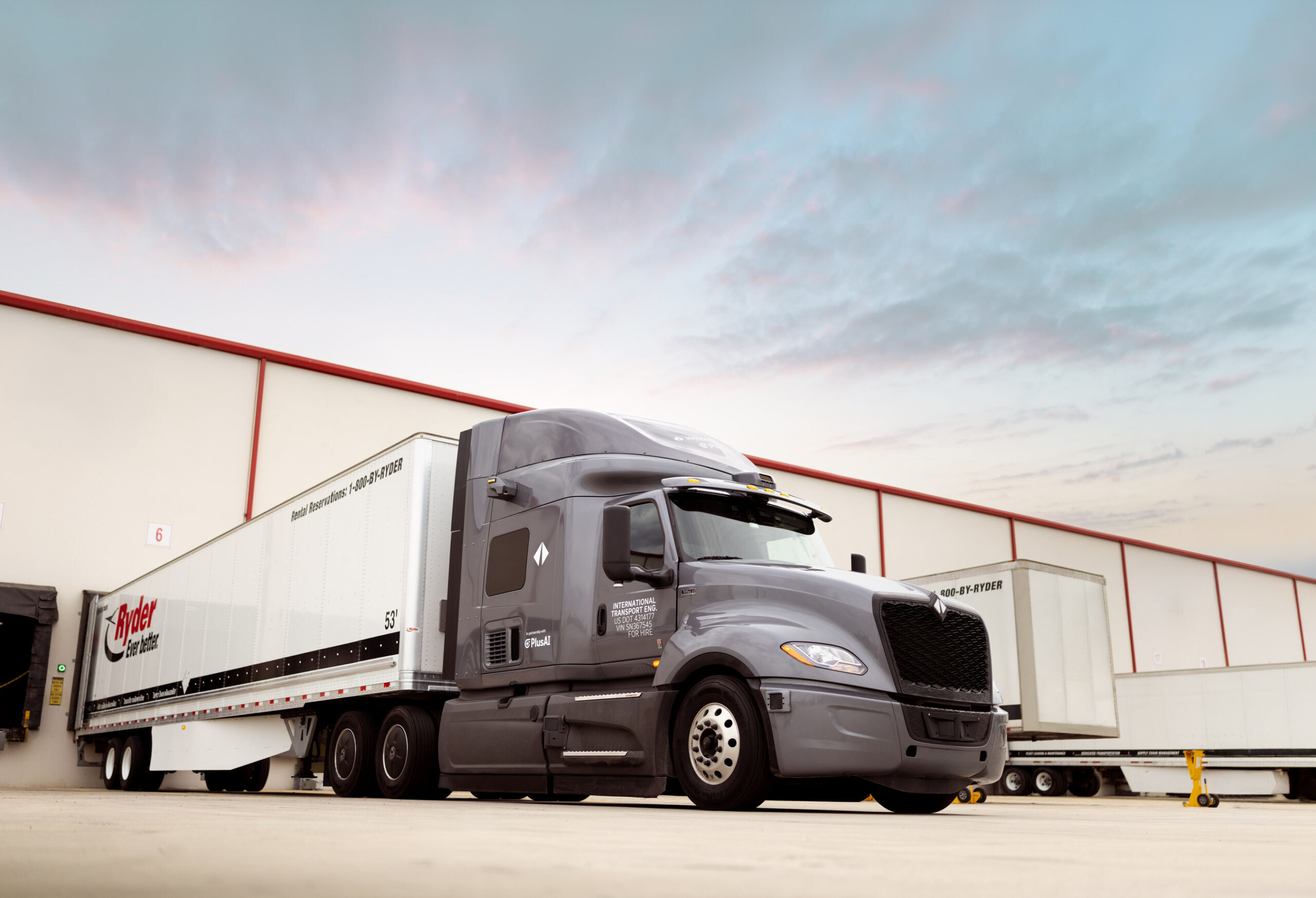
International Tests Autonomous Trucks on Live Freight
International Launches Autonomous Truck Pilot: What It Means for Fleets
March 31, 2026 — International Motors has officially moved autonomous trucking one step closer to real-world deployment with the launch of a Level 4 autonomous fleet trial—this time, not on a test track, but on an active freight lane.
The pilot, conducted in partnership with Ryder System and powered by autonomous software from PlusAI, is currently running a 600-mile daily route along the I-35 corridor in Texas.
What’s Actually Happening in This Pilot
This isn’t theoretical testing—it’s a live freight operation.
International has deployed a second-generation autonomous tractor built on its LT Series platform, equipped with factory-integrated sensors (lidar, radar, and cameras) and powered by its S13 integrated powertrain. The truck operates with a human safety driver while the autonomous system handles the majority of the route.
Key early results include:
- 100% on-time delivery
- 92% of the route driven autonomously
- Pre-trip inspections under 30 minutes
- Improved fuel efficiency
The goal is clear: validate whether autonomous technology can function inside existing fleet operations—not alongside them.
Why This Is Different From Past Autonomous Testing
Most previous autonomous truck trials have focused on:
- Closed environments
- Dedicated terminals
- Controlled pilot programs
This initiative is different because it removes those barriers.
International is testing autonomy in a point-to-point freight model using existing infrastructure, meaning:
- No specialized autonomous hubs required
- No major changes to customer workflows
- Real-world variables (traffic, timing, logistics) are fully in play
That’s a meaningful shift from experimentation to operational validation.
What This Signals for the Industry
From Cumberland’s perspective, this announcement highlights three important industry trends:
- Autonomy Is Moving From Concept to Controlled Reality – We’re not at full deployment yet—but this proves autonomous trucks can operate consistently on real freight lanes.
- OEM Integration Is Leading the Charge – This isn’t a retrofit solution. International is embedding autonomy directly into the truck at the factory level—combining vehicle, powertrain, and software into one system. That matters for long-term reliability, serviceability, and scalability.
- The Focus Is on Long-Haul, Repeatable Routes – The I-35 corridor test reinforces where autonomy is most viable first: High-mileage lanes, Predictable routes, Hub-to-hub freight — This is where fleets are most likely to see early adoption.
What Fleets Should Pay Attention To
While this is a major step forward, it’s important to stay grounded in what this means today:
- There is still a safety driver onboard
- Deployment is limited to specific lanes and use cases
- Widespread adoption will take time
However, fleets should start thinking about:
- How autonomous technology could fit into their long-haul strategy
- The role of OEM-supported solutions vs. third-party systems
- The impact on fuel efficiency, driver utilization, and uptime
Contact Cumberland